

Europe Salary Guide 2026: Where English-Speaking Devs Earn Most
Most European tech salaries have flatlined in 2026, barely keeping pace with inflation. But one country is bucking the trend with 5%+ salary growth — and it might surprise you which one leads the pack for English-speaking developers.
Quick Stats
- 📈 Sweden leads growth: 5.5% salary increase vs 1-2% across Europe
- 💰 UK still highest paid: £70k average vs £60k in Sweden
- 🇪🇺 EU Blue Card access: Sweden offers cleaner visa routes
- 🏙️ English-friendly hubs: Stockholm, Gothenburg, Malmö all hiring
Get global tech jobs that only require English
Join engineers from 60+ countries getting English-speaking remote and EU roles, visa jobs, and career tactics every week. Free.
>> Sign up freeContents
If you're an English-speaking developer looking to relocate in Europe, the salary landscape in 2026 tells a stark story. While the UK still offers the highest absolute salaries at around £70k average, most European markets have essentially stagnated. Germany, Netherlands, France, and Spain are all showing anaemic 1-2% growth — barely enough to keep up with inflation.
But there's one clear outlier that international developers should pay attention to: Sweden. With 5.5% salary growth in 2025 and a remarkable 17% jump the year before, it's become Europe's hottest market for developer pay rises. Here's what that means for your career.
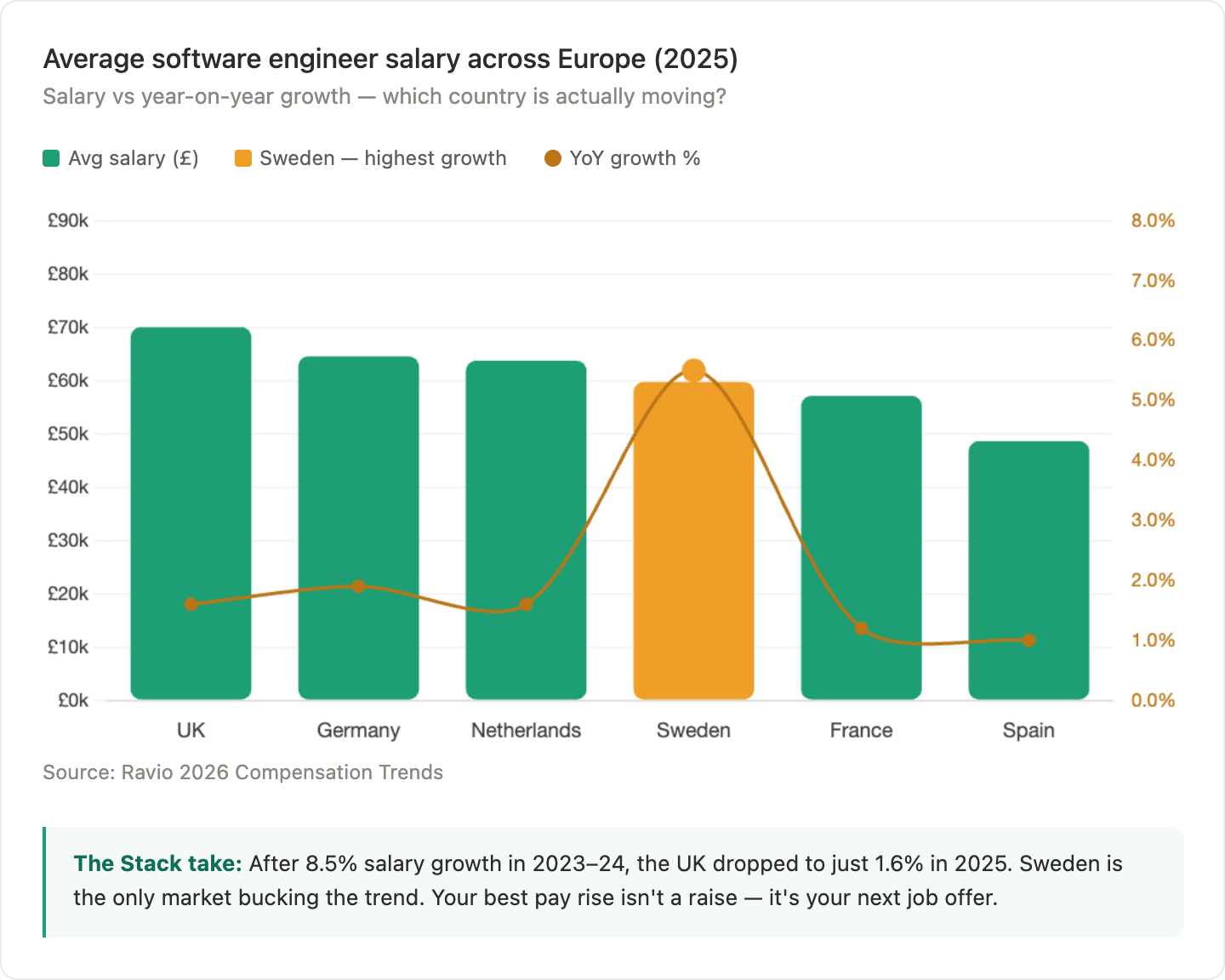
The European Salary Reality Check
The data reveals a sobering truth about European tech salaries in 2026. Most markets have hit a plateau:
- UK: £70k average, 1.6% growth (down from pre-2022 highs)
- Germany: £65k average, 2.0% growth
- Netherlands: £63k average, 1.5% growth
- France: £57k average, 1.2% growth
- Spain: £48k average, 1.1% growth
This stagnation means that meaningful salary increases in Europe are more likely to come from switching jobs rather than relying on annual raises. The post-pandemic hiring boom has cooled, and companies are being more conservative with compensation budgets.
For English-speaking developers, this creates an interesting dynamic. While traditional hubs like London and Amsterdam still offer high absolute salaries, the growth trajectory suggests looking elsewhere for career acceleration.
Why Sweden Stands Out
Sweden's 5.5% salary growth isn't a fluke — it's driven by fundamental market dynamics that favour international developers:
Growing tech ecosystem: Stockholm has emerged as Europe's second-largest tech hub after London, with unicorns like Spotify, Klarna, and King creating a ripple effect. This growth is creating genuine competition for engineering talent.
Skills shortage: Sweden's relatively small population (10.4 million) means local talent pools are limited. Companies are actively recruiting internationally, making English-speaking developers particularly valuable.
Government support: Sweden's participation in the EU Blue Card scheme, combined with progressive immigration policies for skilled workers, makes it one of the more accessible European destinations for non-EU developers.
The salary growth is also sustainable. Unlike speculative bubbles in other markets, Sweden's increases are backed by real revenue growth in its tech sector and increasing international investment.
English-First Companies in Sweden
One of Sweden's biggest advantages for international developers is the prevalence of English-first companies. Most Stockholm tech companies hire and operate primarily in English, making the transition smoother than in countries like Germany or France.
Major English-first employers include:
- Spotify: Global music streaming giant with English as the working language
- Klarna: Buy-now-pay-later fintech expanding globally
- King (Activision Blizzard): Mobile gaming powerhouse behind Candy Crush
- Ericsson: Telecommunications infrastructure with global operations
- H&M Group: Fashion retail with significant tech operations
Beyond these household names, Sweden's startup ecosystem is thriving with well-funded scale-ups actively hiring international talent. Companies like Voi, Tink, and iZettle (acquired by PayPal) have created a culture where English proficiency is expected, not exceptional.
The Reality Check: Tax, Language, Visa
Before you start updating your CV, here are the practical considerations that every international developer needs to understand:
Tax Reality
Sweden's tax system is progressive and can reach 50%+ at senior salary levels. Use Sweden's official tax calculator before accepting any offer. A £60k gross salary in Stockholm leaves you with roughly £36k net — still competitive given the lower cost of living compared to London, but factor this into your calculations.
The Language Ceiling
While most Stockholm tech companies operate in English, Swedish fluency becomes crucial for senior leadership roles. Internal politics, stakeholder management, and career progression often favour Swedish speakers. Plan for language learning if you're targeting long-term career growth.
EU Blue Card Advantage
Sweden participates in the EU Blue Card scheme, making it one of the more accessible routes for non-EU engineers. The requirements are straightforward: a university degree (or 5+ years experience), a job offer with salary above the threshold (currently around £35k), and basic health insurance. Processing typically takes 2-3 months.
Long-Term Wealth Building
Sweden's combination of lower cost of living than London, strong public services, and work-life balance culture creates genuine long-term wealth potential. Housing costs in Stockholm are roughly 30% lower than London, and the comprehensive social safety net reduces many expenses that UK-based developers face.
Beyond Stockholm: Gothenburg and Malmö
Stockholm dominates Sweden's tech scene, but two other cities offer compelling alternatives with less competition and lower living costs:
Gothenburg
Sweden's second city has a growing tech scene anchored by Volvo's digital transformation and a cluster of automotive tech companies. Salaries are 10-15% lower than Stockholm, but housing costs are 25-30% cheaper. The city has a strong English-speaking expat community and several international companies.
Malmö
Connected to Copenhagen by the Öresund Bridge, Malmö offers access to both Swedish and Danish job markets. The city has attracted several fintech and gaming companies, and the proximity to Copenhagen creates unique cross-border opportunities. Housing is significantly cheaper than both Stockholm and Copenhagen.
How to Apply from Outside Sweden
Applying for Swedish tech jobs as an international candidate requires a targeted approach:
CV and Application Tips
- Lead with your English proficiency and international experience
- Mention EU Blue Card eligibility prominently
- Highlight remote work experience and cultural adaptability
- Include any Scandinavian cultural knowledge or previous Nordic experience
Interview Preparation
Swedish tech interviews tend to be less aggressive than Silicon Valley-style questioning but more thorough than typical UK processes. Practice your technical communication in English and prepare for questions about cultural fit and long-term commitment to Sweden.
Best Job Boards and Resources
- The Hub - Stockholm's main tech job board
- Jobs.se - General Swedish job board with good English filters
- LinkedIn - Many Swedish companies recruit internationally via LinkedIn
- Company career pages - Direct applications often work better than job boards
Final Verdict
Sweden represents the best opportunity in Europe for English-speaking developers seeking salary growth in 2026. While the UK still offers higher absolute salaries, Sweden's 5.5% growth rate, English-friendly work culture, and accessible visa routes make it an attractive alternative.
The key factors that make Sweden work for international developers:
- Real salary growth: 5.5% vs 1-2% elsewhere in Europe
- English-first companies: Most tech companies operate in English
- Visa accessibility: EU Blue Card participation with clear requirements
- Quality of life: Strong work-life balance and comprehensive social services
- Long-term potential: Growing tech ecosystem with international companies
The main challenges — high taxes and the Swedish language ceiling — are manageable with proper planning. For developers willing to invest in language learning and comfortable with Nordic tax rates, Sweden offers the strongest salary trajectory in Europe for 2026.
Consider Sweden if you're currently earning £45k+ in tech, have 3+ years experience, and are looking for both immediate salary growth and long-term career development in an English-friendly environment.
Get the best remote and global tech jobs in your inbox
Join 55,000+ engineers getting curated remote roles, visa-sponsored jobs, and career tips every week. Free.
>> Sign up free